
When Chinese people ask you “你怎么样?” (Nǐ zěnmeyàng?), meaning “How are you?”, they usually aren’t expecting a detailed answer. Most of the time, it’s simply a polite greeting, much like asking “How’s it going?”
The easiest responses are “我很好” (Wǒ hěn hǎo), meaning “I’m very well” or “I’m fine”, or “还可以” (Hái kěyǐ), meaning “I’m okay”, “I’m doing fine”, or “I’m not too bad.”
If you answer “我不太好” (Wǒ bù tài hǎo), meaning “I’m not doing well”, you’ve changed the tone of the conversation. What started as polite small talk has suddenly become something more personal. The other person will usually feel they should ask what’s wrong and continue the conversation. After all, if someone tells you they’re not doing well, it would feel a little strange to simply reply, “Oh, okay,” and walk away.
But what if you’re not feeling great, yet you don’t really want to explain yourself?
That’s where one of my favourite Chinese expressions comes in:
“马马虎虎” (mǎmǎhūhū).
Literally, it means “horse horse tiger tiger.” It sounds completely random, but don’t worry, it has nothing to do with animals.
It’s simply a natural way to say:
• “So-so.”
• “I’m okay.”
• “Could be better.”
• “Not too bad.”
In other words, things aren’t great, but they’re not terrible either. It’s the perfect answer when you don’t feel like getting into a long conversation.
So where did this funny expression come from?
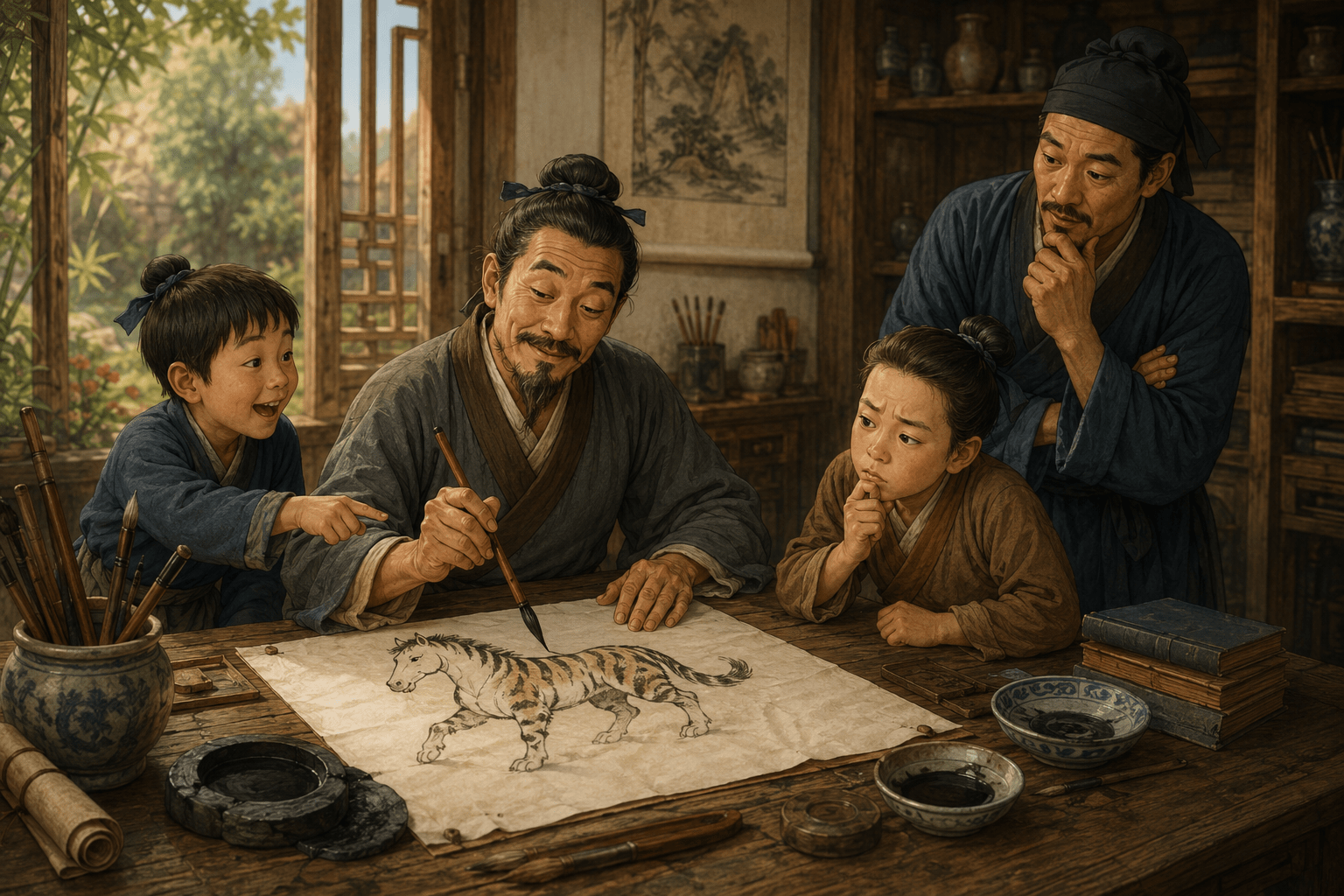
According to a traditional Chinese folktale, there was once a painter named “马虎” (Mǎ Hǔ). Rather fittingly, his name meant “Horse Tiger”, and he was famous for being rather careless.
One day, someone asked him to paint a “tiger” (虎, hǔ). Before he had finished, another customer arrived and asked for a “horse” (马, mǎ). Instead of starting over, he simply added a few strokes to the original painting, leaving it looking like neither a horse nor a tiger.
When people asked him what the animal was, he casually replied,
“马马虎虎” (mǎmǎhūhū).
The painting later caused a series of unfortunate misunderstandings.
His older son looked at it and thought it was a tiger. His younger son was convinced it was a horse.
One day, the older son saw a real horse. Believing it was a tiger, he shot it with his bow. The horse’s owner demanded compensation.
Later, the younger son came across a real tiger. Thinking it was only a horse, he walked right up to it… and was killed.
Overcome with grief and regret, Mǎ Hǔ realised that his careless attitude had led to tragedy.
Since then, the expression “马马虎虎” (mǎmǎhūhū) has been associated with being careless, sloppy, or doing something without enough attention. Over time, however, its meaning softened. Today, most people use it simply to mean “so-so”, “just okay”, or “not bad, but not great.”
So next time someone in China asks you “你怎么样?”, and you’re neither fantastic nor terrible, you already know the perfect answer:
“马马虎虎!”
Leave a Reply